
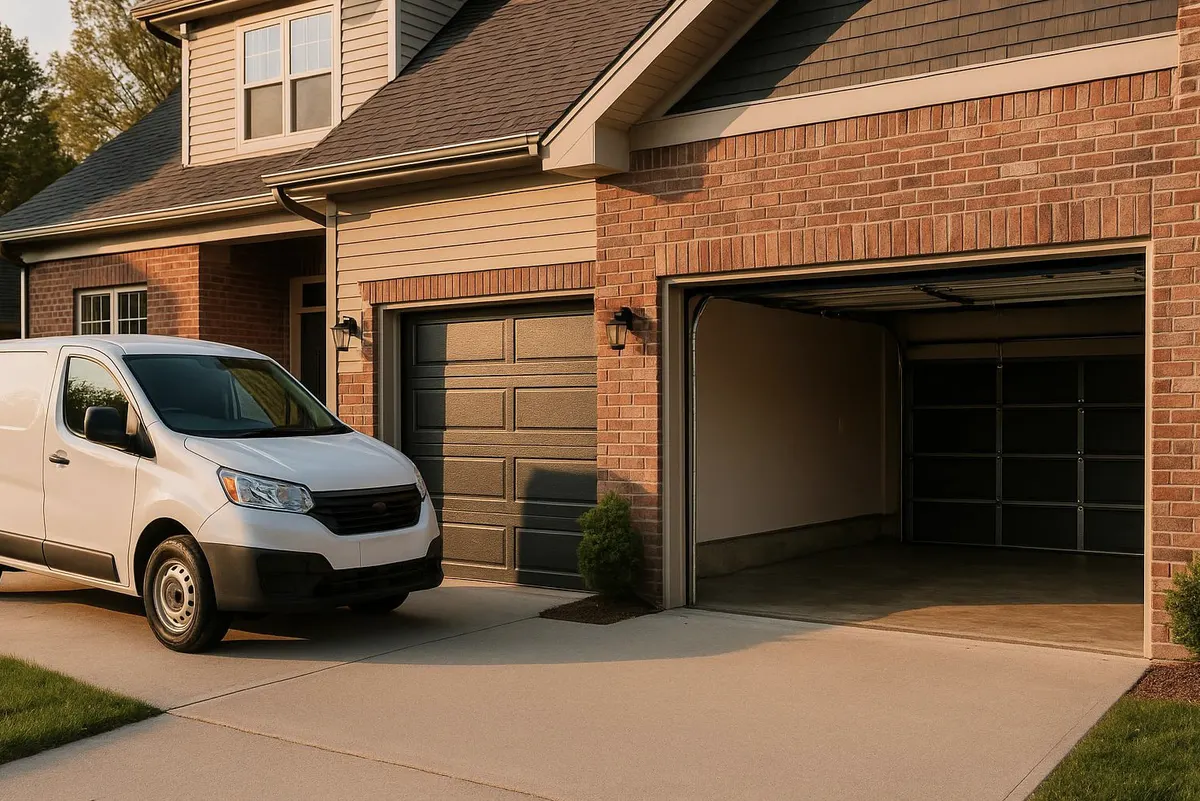
You pull into the driveway one evening in late November and something's different. The garage door doesn't close with that same solid thud it had back in August. There's a thin sliver of light under the bottom seal that wasn't there before. When the door goes up, it rattles a little more than you remember. Nothing looks broken, exactly — it just feels loose.
That's a familiar moment for homeowners in Davie this time of year. It's not your imagination, and it's not a coincidence.
Why the Season Change Affects Your Garage Door
South Florida doesn't get a hard winter, but it does get a real shift. Hurricane season technically runs through the end of November, so the wind and rain that stress-test your door's hardware are still a possibility even as temperatures start to drop. At the same time, humidity levels fall and cold fronts push through with cooler, drier air.
That drop in moisture matters more than people expect. Wood and composite garage doors that swelled slightly during the humid summer months start to shrink back as the air dries out. Steel doors and their components contract a bit in cooler overnight temperatures, then expand again in the afternoon sun. Hardware that was snug all summer can work itself slightly loose. None of this happens overnight, but by November it's usually noticeable if you know what to look for.
Add in the lingering effects of salt air if you're anywhere near the coastal side of Broward County, and you've got a recipe for rust spots on springs, hinges, and rollers that may have started during the wet months and are just now showing up as stiffness or squeaking.
A Practical Pre-Season Checklist
Here's what's worth walking through in your own garage before the season fully turns:
- Check the bottom weatherstripping. Press down on the rubber seal along the bottom of the door. If it's cracked, flattened, or pulling away from the track, it's letting in drafts, bugs, and water during the next downpour. This is an easy, inexpensive swap.
- Look at the gap along the sides and top. If daylight is visible where it wasn't before, shrinkage or panel shift may have thrown off the seal. Sometimes this is just the weatherstripping; sometimes it points to the door needing realignment.
- Inspect springs for rust and gaps in the coils. Torsion springs under tension are not something to adjust yourself, but you can visually check for flaking rust, stretching, or visible gaps between coils that weren't there before.
- Test the cables and rollers. Fraying cable strands or rollers that look worn down, cracked, or off-center are warning signs. Rollers take a beating from humidity swings, and plastic rollers in particular can degrade faster than people expect in this climate.
- Run the door manually. Disconnect the opener (most have a red release cord) and lift the door by hand. It should move smoothly and stay roughly in place when lifted halfway. If it's heavy, uneven, or drops on its own, the spring tension has likely shifted.
- Check wind-load hardware. If your door has reinforcing struts or bracing for storm readiness, make sure none of the mounting hardware has loosened. With hurricane season not fully over, it's worth confirming this hardware is still doing its job.
- Listen for new sounds. Grinding, popping, or a louder-than-usual rumble during operation often means something has shifted out of alignment, even if the door still opens and closes fine.
What You Can Handle Yourself vs. What to Leave Alone
Weatherstripping replacement, tightening visible bolts on the track brackets, and general cleaning of rollers and tracks are reasonable DIY tasks. Spring adjustment, cable replacement, and anything involving the torsion assembly are not. Torsion springs store a significant amount of tension, and a slip during a DIY adjustment can cause serious injury. If a spring looks worn or the door feels off-balance when lifted by hand, that's a sign to stop and call someone rather than push through it.
When to Call Davie Overhead Door Co
If your walkthrough turns up rust on the springs, a door that feels unbalanced, rollers that are visibly worn, or gaps along the seal that weatherstripping alone won't fix, that's where a seasonal tune-up earns its keep. Our Garage Door Maintenance & Tune-Up service covers exactly this kind of pre-season check — spring tension, hardware wear, track alignment, and lubrication suited for Davie's humidity swings, all addressed before small issues turn into a door that won't open some morning.
If you've already got fraying cables or rollers that are grinding instead of rolling, our Cable & Roller Replacement service handles that directly, swapping worn parts before they lead to a cable snap or a door coming off track.
If you're noticing any of the symptoms above in your own garage in Davie, Plantation, Cooper City, Southwest Ranches, Weston, Fort Lauderdale, Hollywood, or Pembroke Pines, give Davie Overhead Door Co a call. We'll come out, check the whole system, and make sure your garage door is ready for whatever the rest of the season brings.