
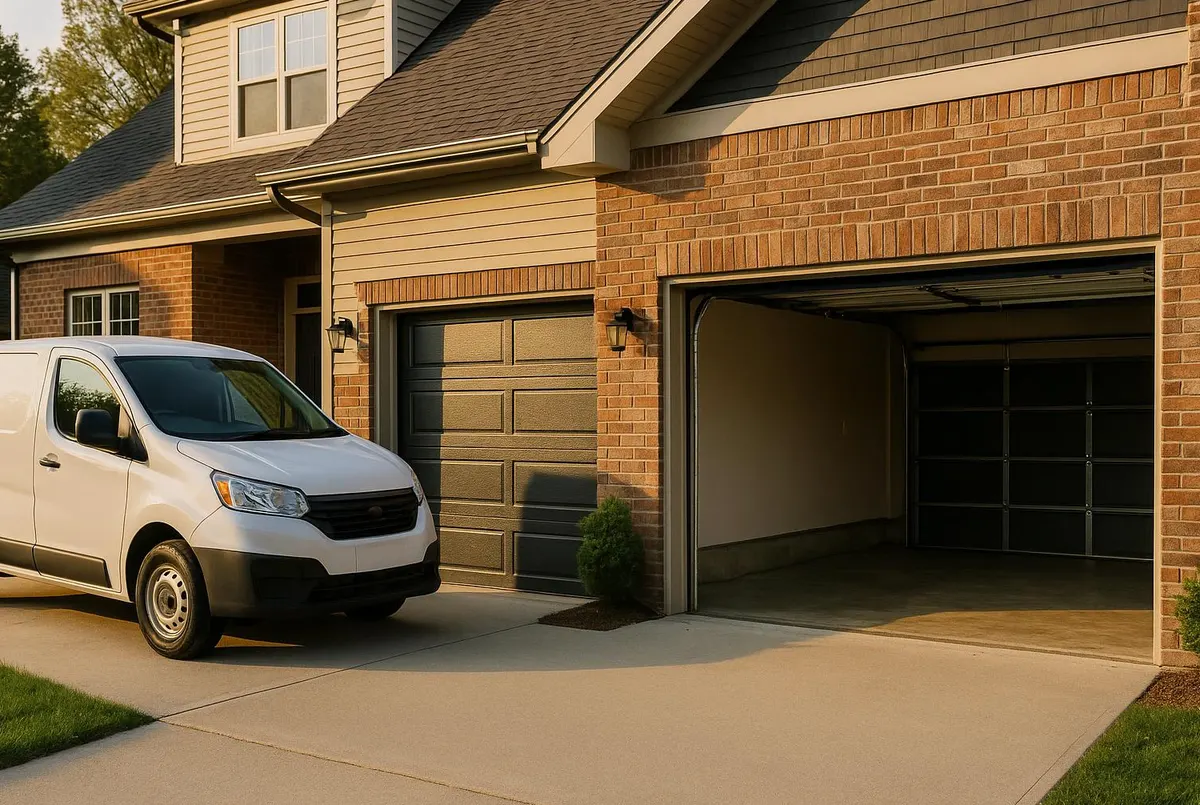
Skip garage door lubrication for one more season in Davie and here's what you're signing up for: hinges that scream every time the door opens, rollers that grind themselves into oval shapes, and an opener motor working harder than it should to drag a stiff, dry door up its tracks. That extra strain doesn't stay small. A door that's fighting friction wears out its springs and cables faster, and those aren't cheap fixes compared to a bottle of the right lubricant and twenty minutes on a Saturday.
The humidity here doesn't help. Moisture in the air mixes with dust and pollen to form a gritty paste on metal parts, and if you're anywhere near the coast, salt in the air speeds up corrosion on top of that. Add in afternoon downpours that can splash water up into the bottom hardware, and you've got a recipe for rust that a quick, correct lubrication routine can mostly prevent.
Tools You'll Need
- A sturdy stepladder
- Silicone-based garage door lubricant spray (not household oil)
- White lithium grease for specific contact points
- Clean rags
- A soft-bristle brush or old toothbrush
- Safety glasses
- A shop vac or stiff brush for the tracks
Step-by-Step: Lubricating Your Garage Door
- Close the door and disconnect the opener. Pull the emergency release cord so you can move the door by hand without the motor engaging while you work.
- Inspect before you lubricate. Look at hinges, rollers, springs, and the bottom brackets for rust, cracks, or visible wear. Lubricant won't fix damaged parts, and spraying over a cracked hinge just hides the problem until it fails.
- Clean everything first. Wipe down hinges, tracks, and rollers with a dry rag to remove dirt, pollen, and old grease buildup. In coastal-adjacent areas, this is also when you'll notice early rust spots on hardware that's taken on salt air.
- Lubricate the hinges. Apply silicone spray to each pivot point where the hinge bends. Work the door up and down by hand a few times to let it soak in, then wipe away excess.
- Lubricate the rollers, but only the bearings. If you have steel rollers with ball bearings, spray the bearing, not the wheel surface. Nylon rollers (common on quieter, newer doors) generally don't need lubrication on the wheel itself, just at the stem where it meets the hinge.
- Clean, don't grease, the tracks. This trips people up constantly. Tracks should be wiped clean of debris, not lubricated. Grease on the track surface attracts dust and grit, which creates more friction, not less, especially after a humid, dusty week.
- Lightly coat the torsion spring. A thin layer of silicone spray along the coils helps prevent rust, which matters here given how fast humidity gets into exposed metal. Don't overdo it. Heavy grease on a spring just collects grime.
- Lubricate the armbar and lock mechanism. A small amount of white lithium grease on the moving joint of the arm bar, plus a little in the lock cylinder if your door has one, keeps those parts from seizing up.
- Reconnect the opener and test the door. Run it up and down a couple of times, listening for grinding, squeaking, or hesitation. Wipe off any lubricant that dripped onto the floor or door panel.
Products to Use and What to Avoid
Stick with a silicone-based garage door lubricant spray for most moving parts, and white lithium grease for hinge pins and the lock mechanism. Both hold up well in heat and don't gum up with dust the way heavier oils do.
Avoid WD-40 as a long-term lubricant. It's a solvent and water-displacer first, so it's useful for breaking loose a rusted bolt, but it evaporates quickly and leaves parts dry again within days, which means more frequent reapplication and more opportunities for rust to creep back in, especially with Davie's humidity working against you. Also skip general automotive grease or household 3-in-1 oil. They're too thick for garage door hardware, and they attract the dust and pollen that's already thick in the air this time of year, turning into a sticky residue instead of a smooth coating.
What's Safe to DIY and What Isn't
Hinges, rollers, tracks, armbars, and locks are all reasonable DIY territory with basic tools and a careful approach. Where you need to stop: the torsion spring itself is under serious tension, and adjusting, tightening, or replacing it is not a homeowner job. Same goes for cables, which can snap back violently if mishandled, and anything involving a door that's come off its track. If lubrication reveals a cracked hinge, a frayed cable, or a spring with visible gaps in the coil, that's your signal to stop and call for a professional inspection rather than keep working the door by hand.
When to Call Davie Overhead Door Co
If your door is still noisy after a proper lubrication, moving unevenly, or you spotted rust and wear during your inspection, it's worth having a technician take a look before a small issue becomes a stuck or off-track door. We offer Garage Door Maintenance & Tune-Up service that covers a full hardware inspection, spring tension check, and track alignment, plus Cable & Roller Replacement for parts that have worn past the point lubrication can help. We show up on time and get it done right the first time.
If you're in Davie, Plantation, Cooper City, Weston, or anywhere nearby and your garage door needs more than a quick spray, give Davie Overhead Door Co a call. We'll get it running smooth and quiet again before the next round of storms rolls through.