
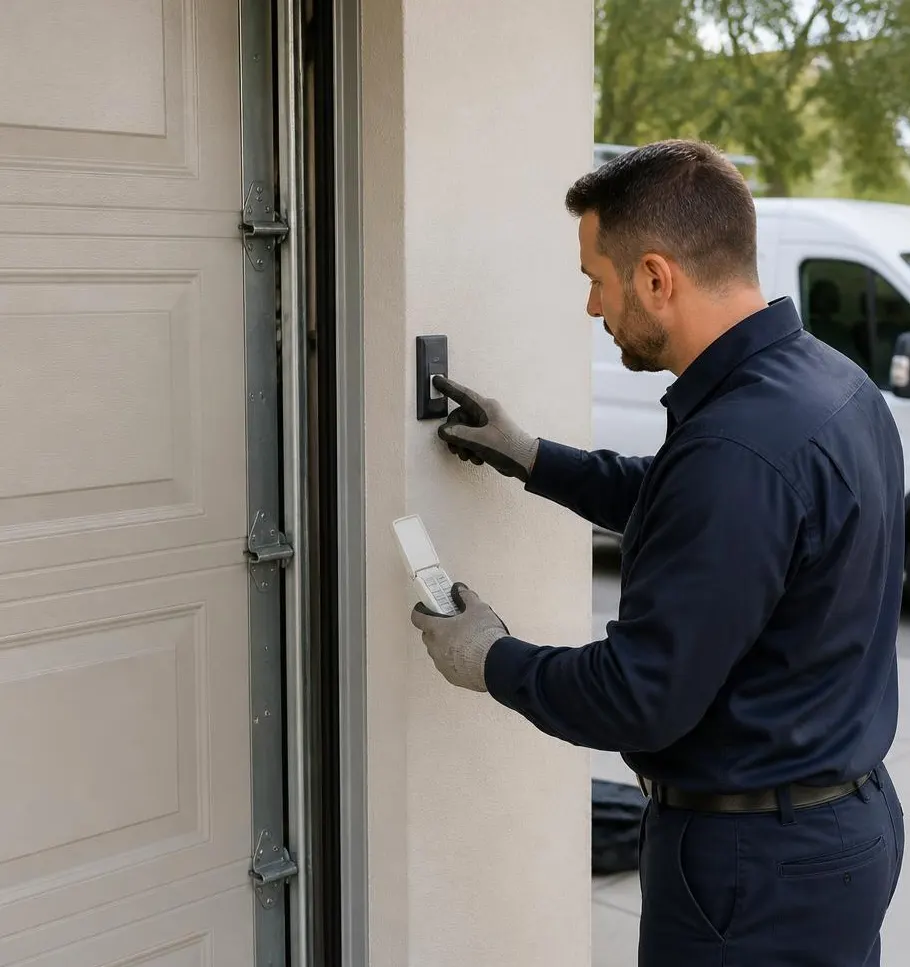
If your garage door opener isn't responding to the remote or the wall button, the problem is almost always power, a misaligned safety sensor, or a wiring issue, not a failed motor. In most cases the fix takes a technician under an hour. The trick is checking things in the right order instead of guessing, especially during Davie's rainy season when humidity and power fluctuations cause a lot of these calls.
What This Usually Looks Like
Before getting into causes, it helps to know which symptom you're dealing with, since each points to a different part of the system:
- Nothing happens at all, no light, no click, no hum, when you press either the remote or the wall button.
- The opener's light turns on and you hear a faint click, but the door doesn't move.
- The motor hums loudly but the door stays put.
- The door works when you stand right next to the opener but not from the driveway or car.
- It works sometimes and not others, with no obvious pattern.
Each of these narrows down where to look first.
The Order a Technician Checks Things
1. Power to the Unit
This is the first thing checked because it's the most common and the easiest to miss. Garage door openers are often plugged into GFCI outlets, and those outlets trip easily during Broward County's afternoon downpours or after a power flicker from a storm. A tripped breaker, a GFCI that needs resetting, or a loose outlet connection will shut the whole system down, remote and wall button included. The fix here is simply resetting the outlet or breaker and confirming the opener's light comes back on. If it trips again right away, that points to a wiring issue worth having an electrician look at, not the opener itself.
2. Remote Batteries and Wall Button Wiring
If power is fine but only the remote is unresponsive, dead batteries are the obvious suspect, but humidity can also corrode the contacts inside the remote over time, especially in homes closer to the coast where salt air speeds up that kind of wear. If the wall button is also unresponsive, a technician checks the low-voltage wire running from the button to the opener unit. These wires are thin and can fray or pull loose, particularly in garages where moisture has caused minor swelling around the wall plate.
3. The Antenna
Every opener has a small antenna hanging from the motor unit, and it's easy to knock loose or damage when storing items overhead. A bent, disconnected, or retracted antenna will shrink the range of the remote down to almost nothing, which explains why some homeowners say it only works standing a few feet away. Fixing this just means making sure the antenna hangs freely and isn't tucked up against the metal housing.
4. Safety Sensors (Photo Eyes)
If the opener hums or clicks but the door won't move, misaligned safety sensors are usually the reason, and this is one of the most common calls in this climate. The two small sensors mounted near the bottom of the track have to be aligned within a fraction of an inch of each other. Humidity-driven swelling in wood door frames, a stray cobweb, condensation on the lenses, or a bump from a bike or lawn equipment can throw them out of alignment. The fix involves loosening the mounting bracket, realigning the sensors until the indicator lights on both stop blinking, and wiping down the lenses, since salt air and moisture film can dull them over time.
5. Limit Switches and the Logic Board
If sensors check out and the door still won't respond, a technician moves to the opener's internal limit switches and logic board. These set the stopping points for the door and can fail or get knocked out of calibration, especially in older units that have been through a few hurricane seasons of power surges. Recalibrating limit switches is usually a quick adjustment, but a damaged logic board typically means the board needs replacing.
6. Motor and Capacitor Issues
A loud hum with no movement can also mean the motor is struggling, often because a capacitor has weakened. This is more common in units eight to ten years old or older, and more common in garages that run hot and humid for months at a time, which puts extra strain on the motor. At this point, a technician is usually weighing a capacitor or motor replacement against the cost of a new opener, since labor plus parts can start to approach the price of a new unit on older models.
7. Interference or a Remote That Needs Reprogramming
Last on the list because it's the least common: nearby interference from other wireless devices, or a remote that's simply lost its programming after a power outage reset the opener's memory. This is a quick fix, reprogramming the remote to the unit, and it's often confused with a bigger electrical problem when it's really just a reset.
When to Call Davie Overhead Door Co
If you've reset the breaker, checked the batteries, and realigned the sensors yourself and the opener still won't respond, it's time to call. We check the system in the same order outlined above, starting with power and sensor alignment before moving into the opener itself, so you're not paying for guesswork. If the issue turns out to be a failing motor or a board that's been worn down by years of heat and humidity, we handle Garage Door Opener Installation with units built to hold up to Florida's conditions. We also offer Garage Door Maintenance & Tune-Up visits that catch sensor misalignment and worn wiring before they turn into a no-response opener in the middle of a storm.
If your opener in Davie, Plantation, Cooper City, or anywhere nearby is ignoring the remote or the wall button, give Davie Overhead Door Co a call. We'll get it diagnosed and working again, no guesswork, no wasted trips.