
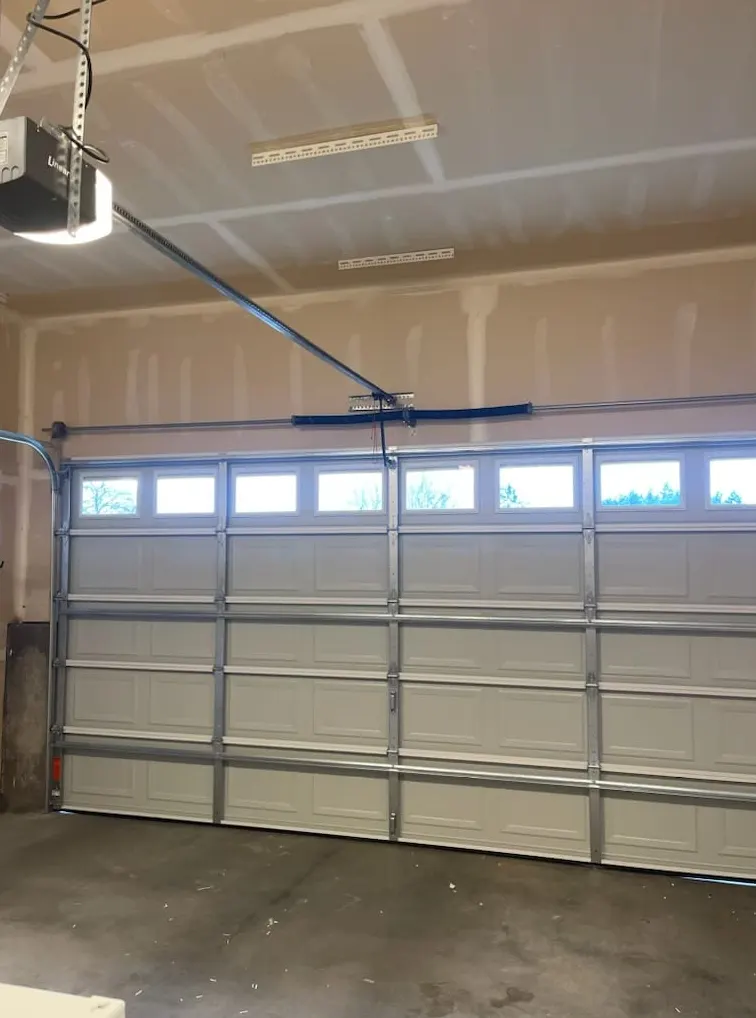
You pull into the driveway after an afternoon downpour and notice it again: the bottom panel of your garage door has a rust bloom spreading along the seam, or the door drags and groans because the panels have swollen with humidity. Maybe a tree branch from the last storm left a dent you can't un-bend. At some point, repairing the same door for the third time stops making sense, and you start wondering what a replacement actually costs.
What You're Actually Paying For
A garage door price covers more than the panels. It includes the track and hardware, springs sized for the new door's weight, installation labor, and often removal and disposal of the old door. Openers, windows, insulation, and decorative hardware are usually priced separately or as add-ons, which is why two doors that look similar in a showroom can carry very different price tags.
Cost by Door Type (National Ranges)
- Basic steel, non-insulated, single layer: roughly $700–$1,200 installed. This is the most common builder-grade option — a flat or lightly embossed panel, single color, no windows.
- Mid-range steel, insulated, two or three layers: roughly $1,200–$2,500 installed. Added insulation helps with heat and noise, and the thicker construction resists dents and warping better.
- Wood composite or faux-wood steel: roughly $1,800–$3,500 installed. These mimic the look of real wood with steel or composite durability underneath.
- Custom carriage style, real wood, or heavy custom hardware: roughly $3,000–$7,500+ installed, depending on wood species, hardware, and whether it's a true custom build or a carriage-style steel door.
These are national ranges, not a quote — the only way to know your real number is to get the door measured and priced for your specific garage.
Factors That Move the Price
- Size: A double-wide door costs meaningfully more than a single, both in materials and in the springs and opener strength needed to lift it.
- Insulation: Higher R-values add cost but help with heat transfer into an attached garage and can quiet the door during wind.
- Windows and hardware: Decorative windows, faux strap hinges, and handles are often priced per option and add up quickly on carriage-style doors.
- Wind-load rating: Doors built to meet hurricane wind-load requirements use heavier gauge steel, reinforced tracks, and stronger end hardware. That reinforcement costs more than a standard door, but it's not optional in storm-prone areas — it's what keeps the door from failing under pressure in a bad blow.
- Opener: If you need a new opener alongside the door, that's a separate cost on top of the door itself, though bundling the two in one visit saves a trip.
- Structural surprises: If the old track is bent, the header is rotted, or the framing needs work, that's additional labor discovered once the old door comes out.
Why Wind Rating and Moisture Resistance Matter Here
South Florida's hurricane season and salt-tinged coastal air change the math on garage doors in ways homeowners inland don't have to think about. A door with the right wind-load rating resists the pressure differences that can cause a garage door to buckle during a storm, which matters for the structural integrity of the whole garage. Separately, humidity and salt air accelerate rust on unprotected steel hardware and cause real wood to swell, crack, or warp over a few seasons. When you're comparing door types, ask specifically about the wind-load rating and the corrosion resistance of the hardware — galvanized or stainless fasteners and tracks hold up far better here than standard-grade parts.
Repair or Replace?
Not every problem means a new door. A single bent panel, a broken spring, or a door that's come off its rollers can often be fixed for a fraction of replacement cost. Replacement starts to make more sense when you're looking at rust working through multiple panels, a door that's been patched more than once, or an opener and door that are both aging out at the same time — in that case, pairing a new door with a new opener in one visit is often more efficient than doing them separately.
When to Call Davie Overhead Door Co
If you're not sure which side of that line you're on, that's exactly what a visit is for. We'll look at the actual condition of your door and hardware — rust, warping, track damage, spring wear — and give you a straight answer on whether Garage Door Installation & Replacement makes more sense than another repair. If you're replacing the door anyway, we can also handle Garage Door Opener Installation at the same time so you're not scheduling two separate visits.
If your garage door in Davie, FL is rusting, dragging, or just past its prime, call Davie Overhead Door Co for a straightforward look and a real recommendation — not just a sales pitch.